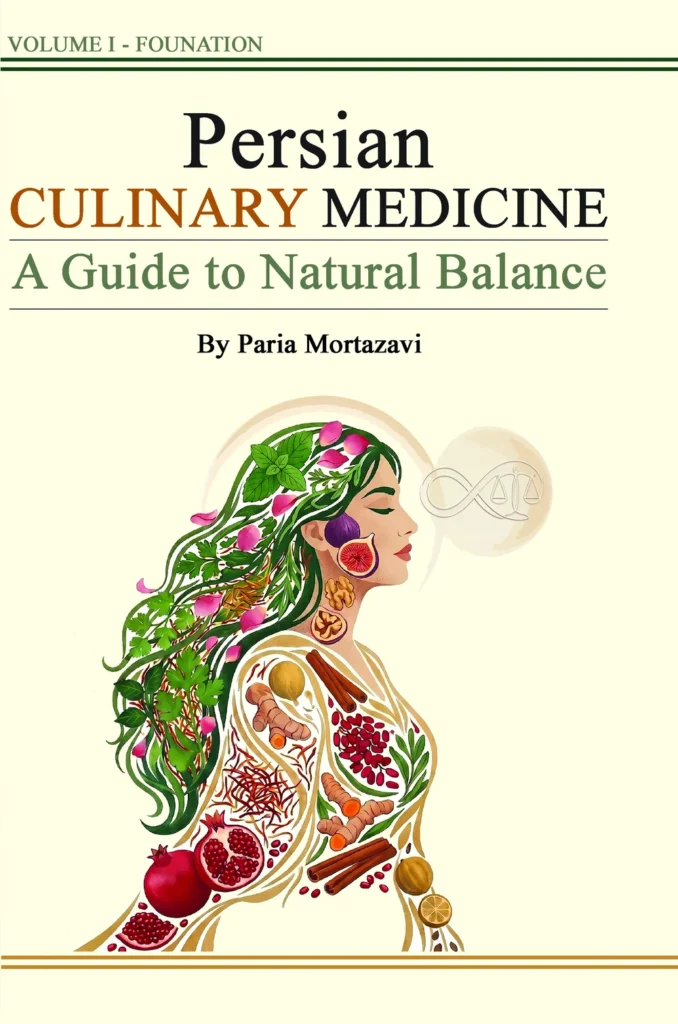
Persian Culinary Medicine: A Guide to Natural Balance
The Missing Link in Your Wellness Journey
Stop fighting your nature. Become the conscious architect of your lasting vitality.
International Endorsements
The author brings together knowledge and practical experience with great skill and charm. She shows that the principles of Traditional Persian Medicine are not merely a historical theory, but can still guide the way we eat and cook today.
PD Dr. habil. Karl-Heinz Steinmetz Founder & Director, Institute for Traditional European Medicine (InstiTEM)

An expertly written and beautifully illustrated comprehensive step-by-step guide. Persian Culinary Medicine is much more than a recipe for health; it can help cultivate a deeper understanding of the nature of self, health, and disease.
Roy Upton, RH, DipAyu President, American Herbal Pharmacopoeia
Are You Struggling with Digestive & Metabolic Imbalances?
Are you struggling with issues such as unexplained weight gain, fatty liver, constipation, or blood sugar fluctuations? Your body is not working against you; it is simply warning you of an internal disharmony. Discover the preventive and restorative power of Persian Culinary Medicine to:
- Decode your body: Identify the early warning signs of accumulating Waste materials (Fozoolat).
- Rebuild your kitchen: Align your daily meals with your unique Temperament (Mizaj).
- Balance every bite: Use Temperament correctors (Moslehat) to neutralize the adverse effects of foods.
What You Will Discover Inside
Two volumes, one method
Volume 1 — Fundamentals and the Art of Kitchen Alchemy
Your body’s manual: how innate Temperament (Mizaj) works, how the vital fluids (Akhlat) are produced, how to read your body’s warning lights, how to reinvent your kitchen and the six essential lifestyle principles for maintaining balance.
Volume 2 — The Health-Supporting Cookbook
Practical applications and traditional, health-oriented recipes — 150 of them tested and standardized by culinary director Iman Khoshkholgh — with summary temperament tables and the art of culinary correctives (Moslehat).
About the Author
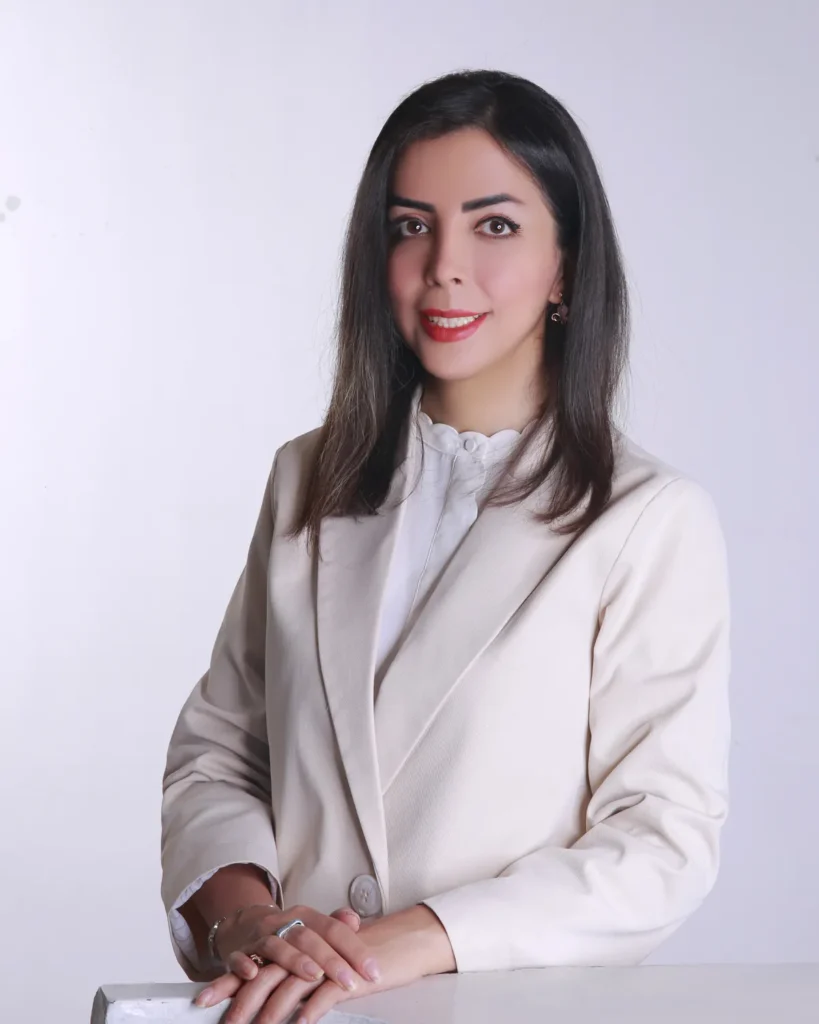
Paria Mortazavi is a researcher, health consultant, and the author behind the Persian Culinary Medicine approach. Dedicated to bridging the ancient wisdom of Traditional Persian Medicine (TPM) with modern lifestyles, she specializes in the science of temperament (Mizaj) and dietary correction. Her mission is to empower individuals to step away from one-size-fits-all diets, restore their body’s natural balance, and become the conscious architects of their own lasting health and vitality.
Forewords
Introduction by Roy Upton, RH, DipAyu — President, American Herbal Pharmacopoeia
There are clear distinctions between Western biomedical and traditional systems of healing such as Ayurveda, traditional Chinese (TCM), and Traditional Persian Medicine (TPM). Western and traditional systems of healing should be equally valued for the roles they can play in human health.
Western medicine, which dominates in institutionalized health care today, excels in acute disease care, crisis management, life-saving surgical and pharmaceutical interventions, and management of symptoms in acute disease but fails miserably in health care. It can be characterized as a militaristic approach designed to seek and destroy disease rather than promote health. It uses high tech pharmacological and surgical therapies that take the place of normal bodily functions or surgery to remove diseased organs. The United States, more than the majority of other countries, is dominated by this thinking to the almost complete exclusion of traditional healing modalities in formal medical care settings and reimbursement programs. The result of this dependence is that Americans spend more on medical care than any other similarly developed nation but have the worst health care statistics in virtually all metrics of wellness. Moreover the majority of diseases experienced today are diseases associated with behavior for which there is no pill or scalpel.
Traditional medicine systems, in contrast, can be characterized as a humanistic nature-aligned approach that seeks to use relatively gentle, low tech, inexpensive therapies to prevent disease, promote health and wellness, and restore homeostasis to an imbalanced system and places patients and consumers at the center of their healing journey. But, when emergencies arise due to accidents or disease, we should be grateful for the expert acute care offered by western medicine. What has become abundantly clear in recent decades is that it is access to both systems that provides consumers and patients with the best of what all medical systems have to offer.
In 2023, the World Health Organization (WHO) convened its first Global Summit on Traditional Medicine in Gujarat, India that resulted in the Gujarat Declaration that recognized that traditional medicine is critical in primary care. Moreover, the focus of WHO encompasses all aspects of health ranging from individual, community, societal, global, to planetary health. They made crystal clear what modern medicine fails to even begin to grasp; that global health begins with environmental health and that, without environmental health, we cannot achieve global health; that all of us on the planet are connected with each other and to the planet.
While TCM and to a lesser degree Ayurveda, are somewhat familiar to many in the West, Traditional Persian Medicine (TPM) is not well represented in Western cultures. Most in the West are not aware that the evolution of western medicine and science was greatly influenced by leading figures in Persian medicine from the 9th century through the European Renaissance period, most notably through the writings and teachings of Ali ibn Sahl Rabban al-Tabari (838-870 CE), Muhammad ibn Zakariya al-Razi (865-925 CE), Abubakr Rabi ibn Ahmad al-Akhawayni al-Bokhari (died 938 CE), Ali ibn al-Abas al-Majusi (930-994 CE), and Abu-Ali al-Husayn ibn Abdallah ibn Sina (981-1037 CE). During the medieval era, these writers systematically compiled, employed, critically reviewed, and added to the medical knowledge of various continents and cultures making great contributions in anatomy, physiology, pathology, public health, medical education, hygiene, and dietetics. The Canon of Medicine of Ibn Sina (Avicenna) was translated into Latin in the 12th century and remained a primary medical text of European physicians for 500 years.
Persian Culinary Medicine opens a door to understanding the ancient concepts and knowledge from these early scholars at a time before we were separated from nature courtesy of the industrial revolution. It provides an expertly written and beautifully illustrated comprehensive step by step guide of how TPM can be incorporated into daily life for better health. Written by TPM practitioner and educator Paria Mortazavi, Persian Culinary Medicine is much more than a recipe for health; it can help cultivate a deeper understanding of the nature of self, health, and disease that is immediately applicable in contemporary times. In this work, Ms. Mortazavi reminds us that humans are a part of nature and it is in following the principles of the natural world, as expressed by ancient Persian physicians and sages, that can bring harmony to ourselves and the planet.
Introduction by PD Dr. habil. Karl-Heinz Steinmetz — Founder & Director, InstiTEM
The humoral medicine of the four temperaments has its roots in ancient Greek medicine, above all in the work of Galen. From there, it was received and further developed along three major paths: in Baghdad and Persia and from there further into the East; in Constantinople and the Greek world; and in Rome and the Latin West.
This medical tradition was never confined to physicians and medical books. Its understanding of the four temperaments also found its way into the culinary traditions and food cultures of both the Orient and the Occident. It can still be recognized in the way foods are selected, combined, prepared and seasoned according to their qualities and their effects on the individual. Among these traditions, the Iranian culinary tradition has preserved and developed this knowledge in a particularly rich and living form.
With Persian Culinary Medicine, Paria Mortazavi and Iman Khoshkholgh have succeeded in creating an impressive book. It brings together knowledge and practical experience with great skill and charm. It is carefully researched, clearly presented and, above all, practical for everyday life. The authors succeed in showing that the principles of Traditional Persian Medicine are not merely a historical theory, but can still guide the way we eat and cook today.
This practical dimension is especially important because the book has been written by two people who are not physicians. Physicians naturally have a particular and important function in Traditional Medicine. But Traditional Medicine is not for physicians alone. It is a body of knowledge that belongs to everyday life—and therefore, in a very real sense, to everyone.
This is what makes the work of Paria Mortazavi and Iman Khoshkholgh so valuable. They show how the principles of Traditional Medicine and nutritional medicine can be translated into everyday cooking, eating and prevention. Paria brings her long engagement with Traditional Persian Medicine and the principles of temperament; Iman brings his extensive practical experience with Persian cuisine and recipe development. Together, they make traditional knowledge usable at the place where it matters most: in everyday life and at the table.
This is also where the medical relevance of their work becomes particularly clear. In the face of today’s junk-food pandemic, we urgently need to rethink how we understand nutrition in preventive medicine. We can no longer be satisfied with general dietary recommendations that treat people as if one nutritional prescription could fit everyone. Personalized nutritional medicine takes seriously what traditional medicine has understood for centuries: that food has different effects on different people, and that health depends not only on what we eat, but also on who we are, how we live and what our individual constitution requires.
There is also a natural connection here to Traditional European Medicine (TEM). TEM follows the same fundamental humoral principles, although it has developed a somewhat different culinary tradition and a different aesthetic of cooking. The two traditions are therefore like siblings: they come from different cultural worlds, but they recognize the same underlying principles.
And perhaps that is the nicest thing about such traditions: they give us a reason to sit down together. Different medical and culinary traditions, shaped by different cultures and histories, can recognize one another in their shared understanding of balance, temperament and the role of food. And, finally, they invite us to do something very simple: to be hospitable, to share good food and to enjoy the conversation around the table. It is a pleasure to welcome Paria Mortazavi and Iman Khoshkholgh and their Persian Culinary Medicine to this larger conversation among the many living traditions of Traditional Medicine.
Pre-order the book
Leave your details and we will email you as soon as orders open.